Social Computing and Media

Social Computing and Media is a stage 2 core module in University College Dublin taken by Information and Social Computing students. This blog is my personal E-portfolio where I will be recording my learning and group project activities.

Friday, 20 February 2015

Week 5-Download our app on Google Play!

Our app is complete and on the Google play store. Download it here for free!


Like us on Facbook! 


This Friday our group completed our app and published it to the Google Play store for students to download. We are currently in the process of marketing the app to students across UCD and the societies. So far we have received fantastic feedback with many societies contacting us to collaborate! We had a total download count of 36 over night and two five star reviews!

In our lab on Friday we learnt about Prezi and how it can be used to convey information.
I made this Prezi presentation to share more information about our app.


Saturday, 14 February 2015

Week 4 - Using Diigo and Pinterest

Source: monsterbacklinks.com

This week in Social Computing and Media we spoke about social bookmarking.

Social bookmarking: 

·         Definition: Use of bookmarks, sometimes accompanied by meta data descriptions, to represent organise, share,manage, and search for resources/information online.
·         Metadata may include text, evaluation. folksonomy of tags.


How social bookmarking works:
·         Using social bookmarking tools, individuals select or bookmark online content.
·         Similar to bookmarking in your internet browser, except that here the goal is to share conent.
·         Sharing can be entirely open to the general public or restricted to particular individuals or groups.
·         Other users can add content.

The following video explains Social Bookmarking in more detail, and is quite interesting:

This weeks lab work

This week our lab was not face to face. We were given two tasks to complete on our own at home. 
Our first task was that we had to set up a Diigo account.
"Diigo is a social bookmarking website which allows signed-up users to bookmark and tag web-pages. Additionally, it allows users to highlight any part of a webpage and attach sticky notes to specific highlights or to a whole page." - Source Wikipedia
Our task was simply to set up an account, add the Diigolet button to our browser and bookmark this page about the dark side to mashups. We then had to add an appropriate title, description and tags to the article. In my own time I had a quick look at other Diigo features such as searching, bibliography, sharing and screenshots.

My Library on Diigo
Our second task was to set up an account on Pinterest.
Source: pinterest.com

Pinterest is a web and mobile application company that offers a visual discovery, collection, sharing, and storage tool. - Wikipedia
The task was to set up an account, create a board and pin an image from this article. We then had to go to Stuff I want to Make board and follow it. We also had to like an image and repin it.


My Board on Pinterest


Friday, 6 February 2015

Week 3-Our App is Complete!

Source: http://en.wikipedia.org/

This week in Social Computing & Media we discussed online wikis.

A wiki is an e-space which facilitates sharing of information and expertise to create something e.g. a particular product, consensus around a Q&A. Two examples of popular wikis are Wikipedia and WikiLeaks.


Source: wikileaks.org


Wikis have advantages and disadvantages:

Advantages:
  • They are highly participative.
  • They enable input from all participants.
  • Draft versions are easily identified.
  • Speed of updating information over traditional media.
Disadvantages:
• Quality issues
• Are we all experts?
• Perceived ease of use of software in some cases.
• Gender bias, Contributors are for the most part male.

We also spoke about two types of motivators:

  1. Intrinsic motivator: Motivations as of them selves, not outcome or goal orientated. No rational reason. Eg. wiki posters find it fun to post.
  2. Extrinsic motivation: Self image, personal gain. E.g. Blog posters who want to use their blog for a CV or job.

Our App:

Week three was an extremely productive week for our team project. Our app is complete and we are extremely proud of it. We don't want to give anything away yet, but lets just say that our app has received interest from a very important person. We had an interview/meeting with said person on Friday morning after our lab. So during our lab we were preparing for our meeting by building the final APK and downloading it for demonstration purposes. The lab work we found to be be too simplistic, apologies, so we didn't make the Magic 8 Ball app. In my defence however I already knew how to make that app.

Below are some screen shots from the block editor of our app:


The data inputted has been removed as we feel it will give the app away! These are two of 6 pages. the remaining pages are more complicated. As the main app developer it took me a long time to figure out how to get the app to work perfectly. As a team, we are excited to present this app to the class when the time comes!

Monday, 2 February 2015

No Social Media for a Day Challenge

Source: http://www.givebackourfreedom.com/

Last week, our lecturer gave the class the challenge to go one whole day without using social media.

I am a scout leader and over the weekend I brought my troop camping in the Wicklow mountains. There is no mobile signal here, let alone an internet connection. I guess you could say I took this challenge to the extreme. I couldn't call or test anyone, and I couldn't access the internet.

We camped Friday night until Sunday afternoon. I had brought my phone with me, even though I knew I wouldn't get signal. I guess I'm attached to the device. I bring it everywhere and use it everyday. For the first day I kept checking my phone to see if I had any messages. I did this out of habit. It was a little irritating not being able to contact anyone, or check up on current events, or even the weather forecast. 
On the second day I kept imagining that my phone vibrated in my pocket with a notification. Of course this wasn't possible without a connection. Once I came home I researched this phenomenon. 

I soon found out that it was extremely common:

Sensing phantom phone vibrations is a strangely common experience. Around 80% of us have imagined a phone vibrating in our pockets when it’s actually completely still. Almost 30% of us have also heard non-existent ringing. Are these hallucinations ominous signs of impending madness caused by digital culture?- Source: mindhacks.com
Phantom vibration syndrome or phantom ringing is the sensation and false belief that one can feel one's mobile phone vibrating or hear it ringing, when in fact the telephone is not doing so. Other terms for this concept include ringxiety, hypovibrochondria and fauxcellarm- Source: Goodman, Brenda (4 May 2006). "I Hear Ringing and There's No One There. I Wonder Why.". The New York Times. p. 1.

This is a very interesting topic, one that I plan on researching further.

In conclusion, the lack of internet and mobile signal made me aware that I am, in a way, addicted to using my phone to socialise. It drove me to imagine my phone was vibrating and notifying me when it never did.

Sunday, 1 February 2015

Week 2 - Team Work is Underway

Source; http://project-management.com/

This week in Social Computing and Media we spoke about communication.

There are traditional, semi-traditional and modern ways of communicating.
Traditional means of communication include face to face communication, the telephone and communication through writing e.g. letters.
Semi-traditional communication methods include emails, online chat and broadcasting and the mobile phone. However recently these means are starting to become traditional as more modern methods exist.
Modern forms of communication involve using the internet. Examples include social media sites like Facebook and Twitter and also web conferencing.

Source: www.cite.co.uk

There are many forms of social media types:


  • Publish 
  • Share
  • Discuss
  • Social Networks
  • Micro-blogging
  • Live Stream
  • Live-cast
  • Virtual Worlds
  • Social Gaming
  • MMO

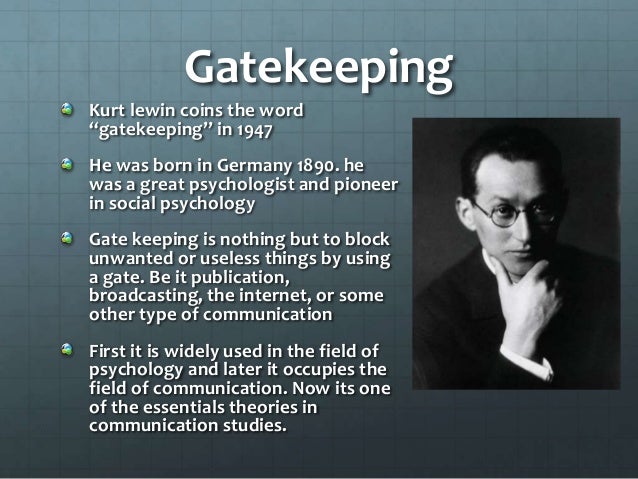
Gatekeepers:In human communication,in journalism and organisation etc. gatekeeping concerns the process through which ideas and information are filtered for publication.


"The fundamental battle fought in society is the battle over the minds of the people...Because communication, provides the support for the social production of meaning, the battle of the human mind is largely played out in the processes of communication. And this is more so in the network society, characterised by the pervasiveness of communication networks."- Castells: Communication Power